Ocarina of Time: why it still does not run in a browser
Here is the answer up front, because you came here for an answer, not a tease: no, Ocarina of Time does not run on this site — not yet. Our Nintendo 64 core fails to start in the browser, and it fails before your file is ever read, which means the problem is ours, not your ROM’s. We would rather tell you that plainly than show you a page that pretends: an emulator that cannot run a game should say so. This page says so — then covers what the game is, why browser N64 emulation is the hard problem it is, what we are waiting for, and what you can actually play right now, including a Zelda that does run here.
File you need: .z64 / .n64 / .v64
What Ocarina of Time is
The Legend of Zelda: Ocarina of Time was released by Nintendo in 1998 for the Nintendo 64, built by Nintendo’s EAD division with Shigeru Miyamoto producing. It is the game that moved Zelda into 3D, and it did it so completely that the vocabulary it invented is still the default: Z-targeting — the lock-on system that solved 3D combat — is its creation, and its DNA runs through every action game with a lock-on button since.
The structure is a masterclass: a day/night cycle over an open Hyrule Field, dungeons that teach a skill and then test it, and an ocarina whose songs work as keys — play the right melody and time itself, the weather, or the geography obeys. It closes with one of the most famous time-travel framings in games: the child Link who began the story and the adult who finishes it are the same person, and the ending honors both. It has sat at or near the top of "greatest game ever made" lists for over two decades, which is why people still search for a way to play it in a browser tab.
The honest status: why it still does not run here (measured, not guessed)
The specific failure, stated plainly: when the N64 core starts on this site, it throws RuntimeError: table index out of bounds, with a WebGL error alongside it in the console — and it does this before it begins interpreting any game data. Your file is not the cause: when we retried with a deliberately empty dummy ROM to rule out a bad file, it failed identically. Mario Kart 64, the other Nintendo 64 title in our library, sits in the same boat.
Why is N64 the hard one? The Nintendo 64 is widely documented as the most difficult mainstream console to emulate. Its two custom coprocessors and the per-game graphics microcode they run mean an accurate N64 emulator does real research-grade work per frame — work that desktop emulators handle with brute force and native code, but which is genuinely hard to do inside a browser tab at playable speed. The six platforms that run here — Game Boy, Game Boy Color, Game Boy Advance, NES, SNES, Nintendo DS — all have mature, stable browser cores. The N64 does not, and we are not going to pretend ours works when it does not.
What we are waiting for is a browser-stable N64 core. We are not going to put a date on it, because dates we cannot keep are the same lie as a play button that does not play.
- Your ROM is not the problem: a deliberately empty dummy ROM fails with the same error.
- Nor is it a settings problem: the failure happens during core initialisation, before your file is ever interpreted.
- We keep watching this core. If it starts working, the loading steps come back — the page will not be left here as bait.
What you can do right now
Play it the official way. Ocarina of Time has real, current, legal re-releases: Ocarina of Time 3D, the 2011 Nintendo 3DS remake with updated visuals and the Master Quest arrangement included, and the Nintendo 64 library on Nintendo Switch Online. If you want to play this game today, those are the polished, licensed ways — and the 3DS version is in many respects the best the game has ever looked.
Play a Zelda that runs here. A Link to the Past — the 1991 Super Nintendo entry, routinely named alongside Ocarina in the series’ all-time top tier — runs in this site’s browser player from your own file, with the same drag-it-in workflow as every working platform here. It is the honest recommendation for the browser-tab Zelda craving.
Use the platforms that work. Six platforms run in the player here — Game Boy, Game Boy Color, Game Boy Advance, NES, SNES, and Nintendo DS — each with the same drag-it-in workflow, saves and save states included. The N64 platform page explains that console’s status in detail.
Keep your dump safe. If you already have your own Ocarina of Time backup, nothing about it expires or goes to waste. The day a stable N64 core runs here, your own file is what you will load — the same arrangement as every other platform on this site, with no re-dumping needed.
N64 controls: for when you play in a native emulator
The table below is how the N64 pad lands on the generic RetroPad mapping, plus the keys that usually end up bound to them. This is not a configuration you can use on this site — the player here does not offer N64 — it is a reference for the first time you open Control Settings in a desktop emulator, so the A / B / Z / four C-buttons layout does not stop you.
N64 is the exception to "everything is already mapped". The emulator’s N64 control scheme has 18 bindings, and it does reserve slots for the Z trigger and the four C-button directions — but they are not bound to your keyboard by default. So: open the emulator menu → Control Settings and bind Z and the C-buttons yourself; the slots are waiting there. For Ocarina specifically, put Z-targeting somewhere comfortable, because you will hold it constantly.
A gamepad is not a luxury on this game. If you own a USB or Bluetooth controller, use it: the C-buttons and the Z trigger were designed for thumbs, and a keyboard makes the ocarina songs and the targeting noticeably clumsier.
| N64 button | In our player |
|---|---|
| D-Pad | ↑ ↓ ← → |
| A | Z |
| B | X |
| Start | Enter |
| Select / L button | V |
| L / R shoulders | Q / E |
| C-buttons | unbound by default — bind in Control Settings |
| Z trigger | unbound by default — bind in Control Settings |
The legal part, stated plainly
We do not host, link to, or provide any Ocarina of Time ROM. The Legend of Zelda and Ocarina of Time are trademarks and copyrights of Nintendo; this site is not affiliated with them. What we provide is an emulator and a player — and today, honestly, an emulator whose N64 support does not start.
The file you would load should be one you extracted from a cartridge you own. Whether private backups are lawful where you live depends on your jurisdiction, and we are not going to pretend that answer is the same everywhere. What we can state exactly is the technical arrangement: the player processes files locally, nothing leaves your machine, and we never see them.
More in this series
Legal games you can play right here, without providing anything
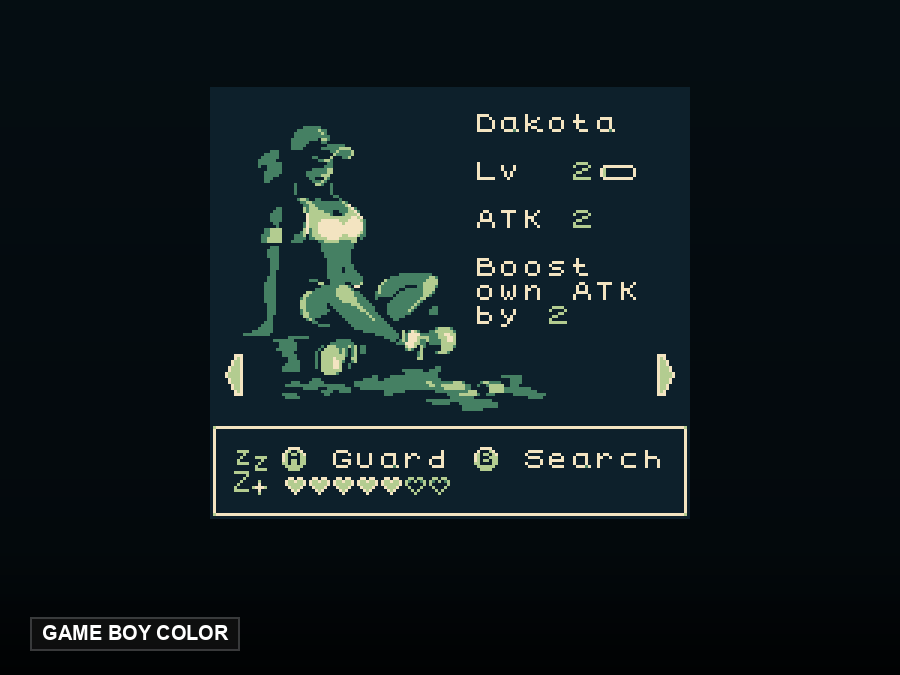
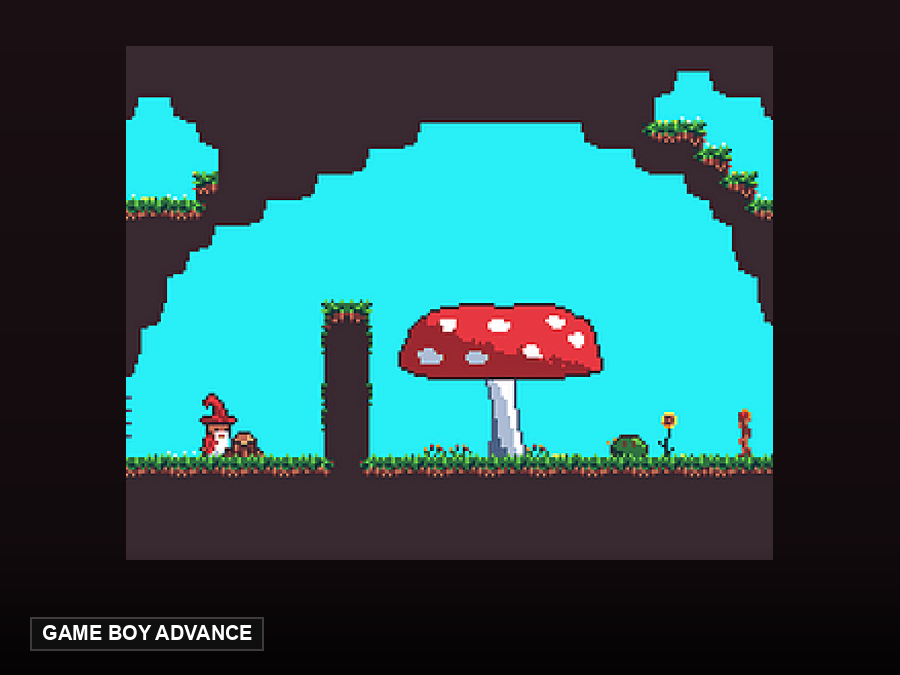
These are open-source homebrew games hosted by this site. They start in one click — no ROM needed, because their authors released them for redistribution.
FAQ
Do I need my own ROM?
You will, when it runs — and today there is nothing to load, because the N64 core does not start. If you want games that need no files at all, this site hosts open-source homebrew titles that start in one click — try Dawn Will Come, a survival management story for the Game Boy Color.
Is my ROM broken?
No. The core crashes before your file is read — the failure happens with any N64 game, on any file, and a deliberately empty dummy ROM fails identically. Your dump is not the problem.
Why does this page exist if the game doesn’t run?
Because people search for a way to play it, and the honest answer — "not here, not yet, here’s why and here’s what works" — is more useful than a blank. The page also exists so that the moment the core works, the people who saved it know where to come.
Can I play any Zelda in the browser here?
Yes — A Link to the Past, the SNES classic, runs from your own file with full save support. Ocarina of Time is the N64 exception, not the rule.
What about Majora’s Mask?
Same console, same core, same status. When the N64 core works, both games are candidates — no dates promised.
Why is the N64 controller so strange?
It is a three-pronged pad with a stick, a Z trigger and four C-buttons. The stick is not true analog input — it reports digital increments like a ball mouse — which is why, when you map it in an emulator, it behaves more like a better d-pad than an analog stick.
When will it work?
When a browser-stable N64 core exists that we can stand behind. We do not publish dates we cannot keep — and on the day it works, the loading steps come back and this explanation goes.