← Back to libraryGame BoyMIT
Rhythm Land · Play Free Online
martendo & Adrian-kwok
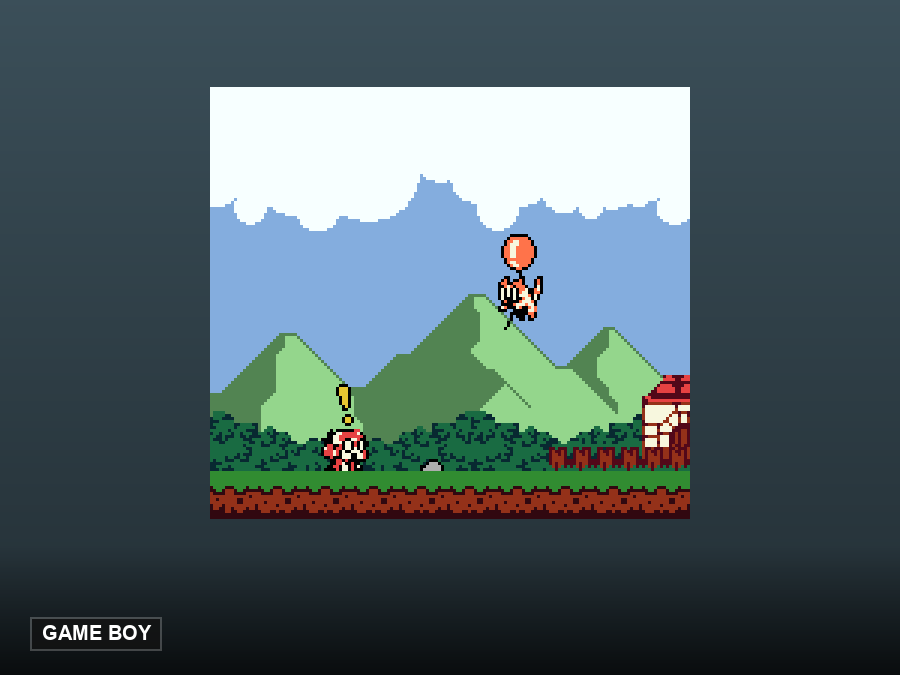
Rhythm Land is a free Game Boy game you can play right in your browser — no download, no install, with save states, gamepad support and touch controls on mobile.
Play nowThe first launch downloads the emulator core — please wait a moment.
How to Play: Controls
Keyboard
| Game button | Keyboard key |
|---|
| D-Pad | ↑ ↓ ← → |
| A | Z |
| B | X |
| Start | Enter |
| Select | V |
These are the emulator's default bindings — remap them anytime in the emulator menu's control settings.
Gamepad
Plug in any USB or Bluetooth gamepad and play right away (Gamepad API) — no setup required.
Touch / Mobile
On phones and tablets a virtual gamepad (D-pad + A/B + Start/Select) appears automatically on the touchscreen.
The emulator menu also includes save states, fullscreen and fast-forward; your saves stay in this browser.
About
Rhythm Land was a shortlisted entry in GB Compo 2021, and its goal is straightforward: bring Rhythm Heaven's teach-you-through-music design to the Game Boy. There is almost no tutorial — you press A on the beat, and the animation and sound tell you whether you landed it. Patterns get denser as you go, and the game is designed to be played by ear rather than memorised.
The credits are clean and specific: martendo handled programming, music and sound effects, Adrian-kwok handled art and design. It is built with RGBDS assembly plus SuperFamiconv, and the project's ATTRIBUTION.md lists every borrowed code driver file by file — Bob Koon's SoundSystem and ISSOtm's gb-vwf text engine, both MIT — while the art and music are original and licensed with the repository.
The project is MIT licensed, so redistribution and commercial use are fine and the ROM builds directly from source. Press "Play now" to play Rhythm Land online free. Rhythm games are latency-sensitive, so headphones and a wired connection help, and the save states are handy for drilling one section over and over. Touch controls work on mobile.
Source & project page ↗
What Is Rhythm Land? Keeping Time on a Four-Shade Screen
Rhythm games are the most fragile genre under emulation. They live and die by the gap between what your ears hear and what your thumbs do, and even a few milliseconds of audio latency turns a rhythm game into a guessing game. That's what makes Rhythm Land such an interesting experiment: it's a Rhythm Heaven-style rhythm game — a genre defined by its Nintendo-published polish — built for the original Game Boy, the least powerful machine anyone has ever attempted this on, by a two-person team for a game jam. And against the odds, the simple hardware turns out to be an ally: the Game Boy's famously punchy sound chip hits like a metronome, and the game keeps its beat honestly.
That's the case for playing it today. Rhythm Land is an open-source love letter to Rhythm Heaven, made for GB Compo 2021, with a stack of music-based minigames — skateboard, sing, cook, battle, and more, each with its own timing twist. It's free under the MIT license, and you can play it here in your browser. It's also a fascinating artifact: a genre experiment on hardware the genre's own famous ancestors skipped.
What the First Ten Minutes Are Like
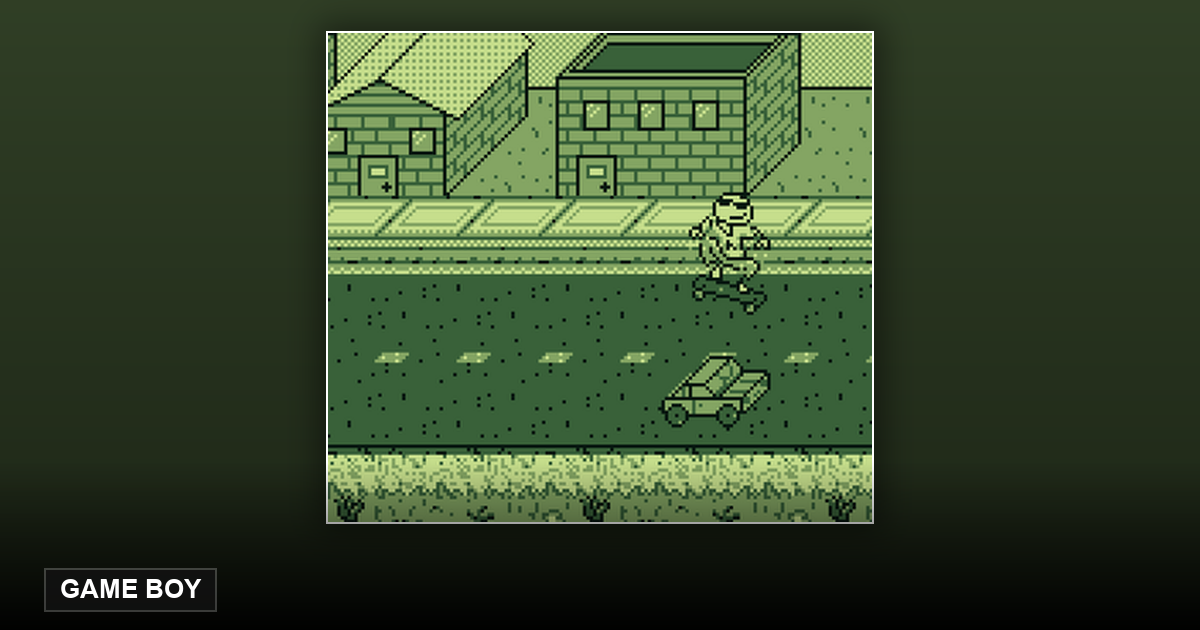
You pick a minigame and the music starts, and within seconds the game tells you what it wants: press to the beat. The minigames follow the Rhythm Heaven formula — each one is a tiny scene with its own logic, where the correct button press is a musical response rather than a reaction. Skateboarding asks you to jump on the beat; cooking asks you to chop on the beat; some games layer a call-and-response structure where the game plays a phrase and you play it back. The four-shade screen means the visual comedy of the genre is conveyed in silhouettes and timing — and honestly, the constraint works. Rhythm Heaven's jokes were always in the timing anyway.
The first ten minutes are gentle. The opening games run at comfortable tempos, and the feedback loop — miss, adjust, lock in — is the genre's core satisfaction. Where the difficulty curve goes from there is tempo: later games compress the same patterns into faster windows, and the game stops forgiving the "close enough" press.
Where You'll Get Stuck
The honest answer is: wherever your sense of rhythm runs out. Rhythm games don't have content walls; they have skill walls, and Rhythm Land's minigames are built on the classic escalation from "tap on the beat" to "tap a syncopated pattern inside a call-and-response while the music tries to trick you." There's no practice mode — the developers say so themselves — so repetition is the only teacher.
It's worth being straight about this game's condition, because the developers are: on the project's own page they describe it as "lacking in polish," admit there's no in-game control description (the wiki has it), and note the current version has bugs that are being fixed. That candor is disarming, and it's also the right frame for what Rhythm Land is: a jam game that kept growing after the jam, made by people who'd rather ship and iterate than polish forever. If you want a finished museum piece, this isn't it. If you want to feel a genre being figured out on impossible hardware, in public, it's a genuinely good time.
Rhythm Land and Rhythm Heaven
Nintendo's Rhythm Heaven series is the genre's gold standard — beginning with Rhythm Tengoku on the Game Boy Advance in 2006, a game so beloved it never left Japan and still gets fan translations. The original monochrome Game Boy, one hardware generation earlier, never got an official game in that lineage. Rhythm Land is the fan-made answer to that absence: same design vocabulary (minigame sketches, musical logic, an affection for the absurd), executed on a machine with a quarter of the screen, a fraction of the memory, and a sound chip that was never asked to carry a whole rhythm game. It doesn't rival its inspiration — it honors it, the way a good cover song honors the original: same melody, rougher voice, real affection.
Playing It Here
On this site, Rhythm Land runs in your browser with the default keyboard mapping: arrows for the D-pad, A on Z, B on X, Start on Enter, Select on V. A gamepad works the moment you plug it in — and for a rhythm game, that's the recommended way to play, since a physical D-pad button has a cleaner press than a key. On a phone, the virtual buttons are workable, but expect your timing window to feel a touch wider than reality; rhythm games are the one genre where input feel is the difficulty.
Save states are your friend in a game with no practice mode: park a state at the start of a minigame you're grinding, and reload instantly instead of replaying the menu. Saves live in the browser, so closing the tab is safe — clearing browser data is not. One practical note: rhythm games expose audio latency more than any other genre, so if the timing feels off, try a different browser or plug in headphones.
Rhythm Land is part of the Game Boy library — for the same hardware with different moods, Tobu Tobu Girl Deluxe is pure arcade speed, and GB-Wordyl is the screen's idea of a quiet evening.
Where Rhythm Land Came From
Rhythm Land was made for GB Compo 2021, the Game Boy homebrew community's annual jam, by martendo (programming, music, and sound effects) and Adrian-kwok (art and design), and is released under the MIT license with source on GitHub. It's built with the RGBDS assembly toolchain, and the credits read like a cross-section of the GB homebrew scene's shared infrastructure: the music was tracked in Stéphane Hockenhull's Game Boy Tracker, the sound driver is Bob Koon's SoundSystem, and the text engine is Eldred Habert's (ISSOtm's) gb-vwf. The developers have continued working on it since the jam — the project is alive, which is more than can be said for most jam entries.
Rhythm Land Tips for New Players
- A physical D-pad beats touch for timing windows.
- Park a save state at a minigame start to grind it.
- If timing feels off, switch browsers or plug in headphones.
- Press on the beat, not on the visuals — trust the music.
- Later minigames compress patterns — learn slow before fast.
Frequently Asked Questions
Does this game need me to bring my own ROM?
No — Rhythm Land is open-source homebrew (MIT) and loads instantly in your browser here. The "bring your own ROM" feature on this site is for commercial game files people already own.
Is this Rhythm Heaven?
No — it's an independent, open-source game inspired by Nintendo's Rhythm Heaven series, built by a two-person team for a Game Boy jam. Same spirit, different hands.
The developers admit it has bugs. Should I still play it?
If you're curious about the genre on original Game Boy hardware, yes — the core rhythm gameplay works, the music is genuinely good, and the project is actively improving. Just go in expecting a jam game, not a Nintendo polish level.
Can I play it on my phone?
Yes, with on-screen buttons — though for rhythm games specifically, a gamepad or physical keyboard gives cleaner timing.
Is it really free?
Yes — MIT licensed, source public, playable here on this site.